
Tuesday, December 2, 2025
Going unnoticed by most, they have no cute face, bushy tail or brilliant feathering to capture interest. Much of their work is done underground, literally. Yet their work is essential to sustaining biodiversity, our ecosystems and human health.
NatureServe, a non-profit organization whose network includes over 60 nature conservation organizations across the US and Canada, recently launched a program for mycology. Mycology is the branch of biology which studies fungi, including yeasts, molds, lichen and mushrooms, a group distinct from plants and animals.
NatureServe’s new lead mycologist, Dr. Jessica Allen, has two decades of scientific practice, research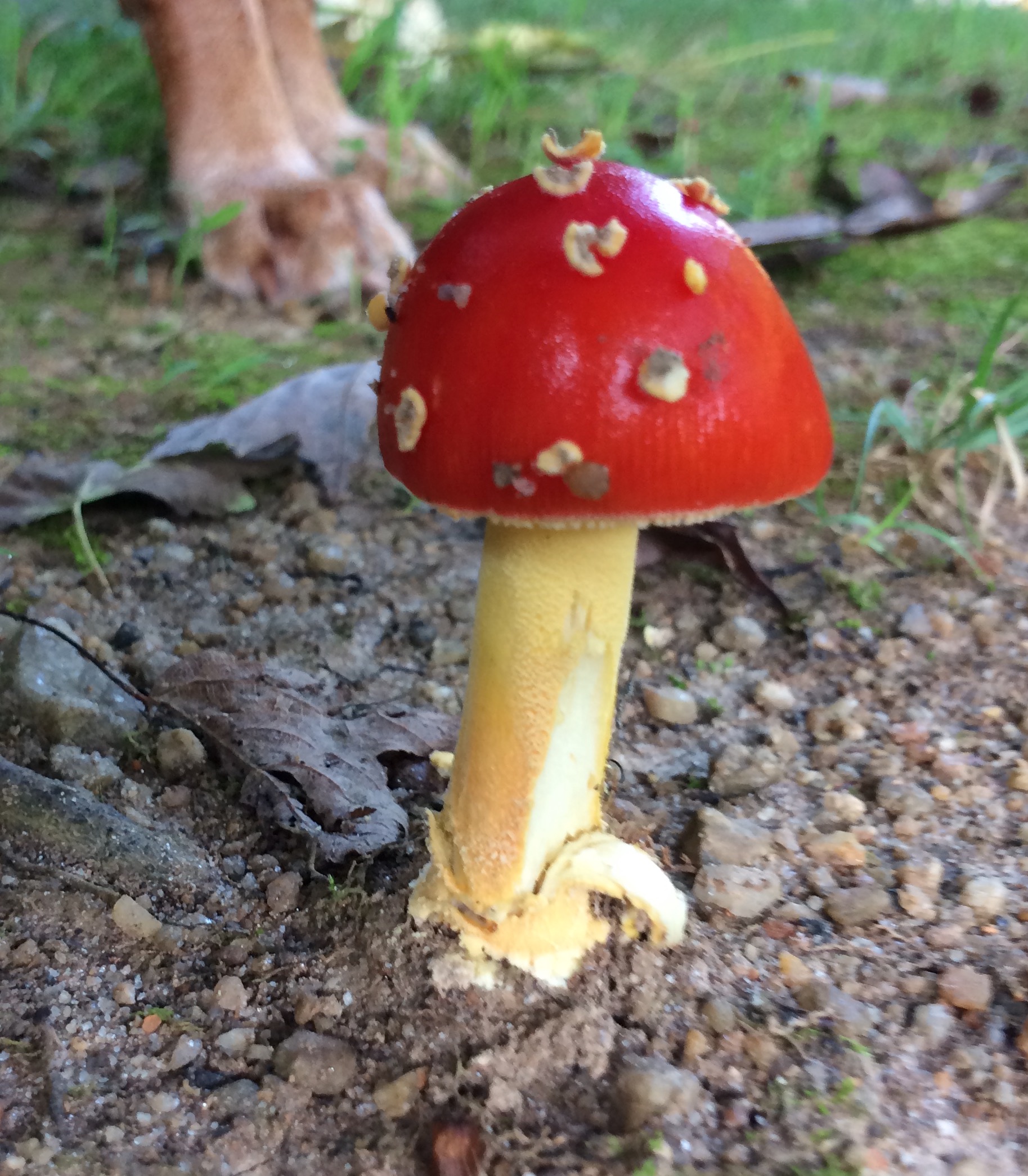 and university teaching in her background, maintaining the thrill, beauty and respect for the mycologic organisms. Allen has taken pleasure in this biologic category since her undergraduate college days. Although she loves all parts of the category, she has developed a particular interest in lichen.
Lichen are actually composite organisms; a combination of a fungus and a photosynthetic partner like an alga or cyanobacteria. The fungi provide a protective structure and absorption of nutrients, while their partners provide food through photosynthesis. Found on all continents and in many different climates, lichens’ super power is the ability to grow on bare rock. They break down the rock over time creating soil for plants. Allen finds beauty as well as function in lichen which grow in soil, on trees and man-made surfaces, as well as rock.
The fungus category “tend to be invisible,” overlooked in general and in conservation efforts, Allen says. Most fungi are microscopic, so not easily noticed. Some are pathogens, so people don’t love them for good reasons. They are mysterious, so people aren’t clear about how to connect with them. They could be slimy or smell weird. They often present unseen underground, attached to plant roots, or “associated with decomposition, a gloomy factor of the life cycle.”
Why should we care, pay more attention to these unseen workhorses of the environment, and devote a program to them? Allen says fungi should be thought of as allies. They work building underground networks that nourish plants, recycle matter into fertile soil, feed wildlife, and give rise to medicines that save lives. They are indispensable for agriculture, carbon storage and ecosystem resilience.
“For too long, fungi have been overlooked in conservation conversations, despite their central role in nearly every ecosystem. With this program, we are shining a much needed spotlight on fungi, ensuring their diversity is recognized, valued, and protected.” NatureServe describes fungi as “the great connectors and recyclers of the Earth, quietly sustaining ecosystems and human health.”
Fungi are “master chemists, each producing a unique set of compounds that have already given us lifesaving medicines like penicillin and lovastatin (a statin medication used to treat high blood cholesterol and cardiovascular disease), as well as industrial products like citric acid,” NatureServe says. A discovery in the 2010s found that a species of fungus, Pestalotiopsis microspora, is a mushroom capable of breaking down and digesting polyurethanes. Plastics have proved difficult to recycle, causing damage to the environment.
Despite their importance, much of the fungal kingdom awaits discovery. While scientists have formally described around 150,000 species, experts estimate that more than 2.5 million exist worldwide. Species discovery is only part of the puzzle. Like wildlife, fungi face mounting threats, from habitat loss to pollution. However, unlike for plants and animals, work to identify species most at risk, and taking action to save the species, has rarely been attempted, leaving fungi especially vulnerable at a time when biodiversity loss is accelerating, Allen added. “Conserving their diversity protects this living library of solutions — critical for developing new drugs and tackling emerging health and environmental challenges.”
Area master naturalists and tree rescuers use another NatureServe product, i.mapInvasives in tracking and management of unwanted plant species. NatureServe provides free access to everyone, to species and ecosystem profiles on their web site. For those interested, see https://www.natureserve.org/access-data. Data included relies on verified scientific studies, so not all Virginia species have been addressed to date. For those who would like to explore more about lichen, Allen recommends this field guide targeted to those in urban areas, which she co-authored, with hints on hunting them: https://yalebooks.yale.edu/book/9780300252996/urban-lichens/
As for NatureServe’s new mycology program, “We are only beginning to understand the true scope of fungal diversity,” said CEO, Anne Bowser. “Shining a light on these vital organisms will help ensure that North America plays a leading role in protecting one of Earth’s most essential, and under-recognized, kingdoms of life.”