
Thursday, August 20, 2026
When the Animal Welfare League of Alexandria first opened its doors in 1946, animal welfare mostly meant getting animals to safe shelter. The animal rescue playbook didn’t consider people who struggled to care for the pets they loved. Celebrating its 80th anniversary this year, the AWLA has reimagined its mission to reflect how deeply human and animal well-being are intertwined.
“Even 10-to-15 years ago, we saw ourselves primarily as an animal sheltering organization, and we felt that was our main purpose,” says Joanna Fortin, Director of Community Programs for the AWLA. “Now, we are evolving and trying to look much further upstream rather than waiting until a crisis happens. We’re looking at the larger picture because we can’t preserve the bond between a person and their pet without understanding the broader factors impacting them. Animal welfare used to operate in a silo, but now we see that when you support the entire community, the pets and their people all benefit.”
The AWLA has spent the last year and a half engineering a human-centric approach to animal care in the Mark Center area along North Beauregard Street. This historically marginalized West End community lacks both a local veterinary practice and a pet store within walking distance or via public transit.
Backed by a highly-selective, two-phase incubator grant from PetSmart Charities, the AWLA aims to keep thousands of West End animals right at home with their families.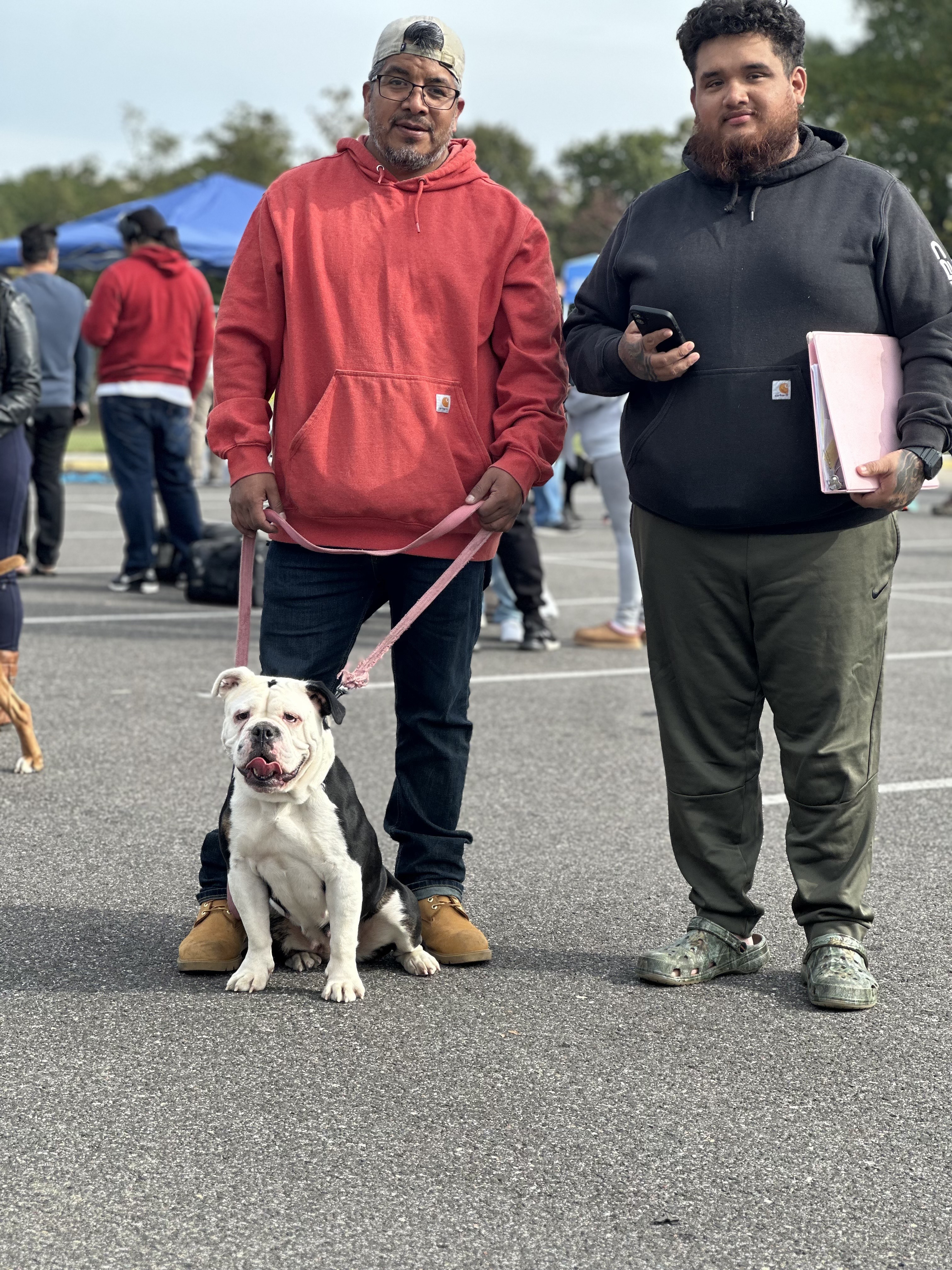
“The Mark Center and North Beauregard area has a clear gap in access to veterinary care,” says Aimee Gilbreath, President of PetSmart Charities, the leading funder of animal welfare in North America. “The area we are focusing on is a small neighborhood, in a community that faces significant social and economic challenges. More than one in four residents live below the poverty line, and many face barriers related to cost, transportation, language, and appointment availability.”
Instead of assuming needs in this area mirror those of other Alexandria communities, the AWLA has been facilitating intentional, meaningful conversations with Mark Center residents to understand what sustainable pet ownership really takes in this neighborhood.
“Because we are working with a community where fear and distrust exist, our priority was simply showing up, listening, and building relationships for a full year,” says Fortin. “Rather than coming in to prescribe solutions or act as 'saviors,' we focused on giving residents a platform to share their true needs so we can deliver what the community actually wants."
This discovery process was specifically funded by the PetSmart Charities Phase 1 grant of $100,000, allowing the AWLA to compensate Mark Center residents for their time. To analyze the outreach data, the AWLA team partnered with the University of Denver’s Institute for Human-Animal Connection (IHAC).
For years up until this point, the AWLA maintained only a surface-level relationship with this West End community, comprising roughly 9,500 residents. Though contracted to provide animal shelter and control services citywide, AWLA leaders recognized they were out of touch with this growing pet population, which today numbers more than 4,000.
“We had been able to do some things in the community, but it was surface-level; we hadn’t really engaged with people to give them the opportunity to tell us what they need,” says Fortin. “Now, we are building a true relationship with these neighborhoods. People are starting to recognize our faces. They see us in the community, and they are smiling and waving.”
The AWLA received the first phase of this grant — which organizations must be invited to apply for — in early 2025 after a long and involved application process.
“We were incredibly honored to be selected,” says AWLA CEO Stella Hanly. “Unlike many funders, PetSmart didn’t dictate how we should use the funds. Instead, Phase 1 was designed for us to go directly into the community and listen — a discovery process that is rarely funded.”
The AWLA was thrilled to secure the grant, especially given widespread misconceptions about the overall wealth of Alexandria, where citywide income averages are skewed upward by government and D.C.-area tech salaries.
“Because Alexandria is broadly perceived as a high-income city, we weren’t totally sure we would qualify,” says Hanly. “People often overlook the deep income disparities here. We showed PetSmart the reality on the ground in the West End — where up to 60% of students qualify for free or reduced lunch — and shared how many calls we receive regarding pet surrender and neglect. We are so grateful they recognized both the urgent need and that we have the capacity to make a real impact.”
Mark Center residents identified five priority needs for their pets: pet food and basic supplies; required vaccinations for apartment residency such as rabies vaccination; behavioral training; grooming services; and accessible, pet-inclusive housing.
This list revealed gaps that surprised even seasoned AWLA leadership. Historically, animal welfare organizations, including AWLA, have prioritized macro-level initiatives like large-scale spay and neuter clinics over basic household needs.
“What surprised me was that pet food was still the number one need. Even with our busy pet pantry at the AWLA, residents needed more localized support there,” Hanly says. “I honestly thought veterinary care was going to be at the top, but basic, day-to-day needs are what we have to address first.”
In the spring of this year, the AWLA was officially granted Phase 2 funding from PetSmart Charities. This phase will distribute $600,000 over the next three years, allowing the organization to zero in on the resident-identified priorities.
Receiving this second round was never guaranteed, but following an effective Phase 1 discovery process, PetSmart Charities leadership recognized the potential for a major success story. For one, they saw that the AWLA wouldn't have to start from scratch to respond to the Mark Center neighborhood’s needs.
“The AWLA stood out because it had both the experience of doing the work and the humility to listen first,” Gilbreath says. “The team brought strong financial and operational capacity, established community relationships, bilingual staff and volunteers, and an existing mobile veterinary clinic. What really stood out to our team was the care AWLA put into the discovery process. They planned to hire a community engagement specialist, provide interpretation, and compensate residents for sharing their time and perspectives.”
The AWLA is focusing on the exact barriers Mark Center pet owners face, without overcomplicating things.
“I’m really confident in our ability to deliver because we were already doing a lot of this work — we’re just following through with a much sharper, community-driven strategy,” Hanly says. “We already have the staffing in place, so these funds allow us to immediately amplify our impact. We’re expanding our pet food pantry and partnering with local groomers to teach families accessible ‘kitchen floor’ grooming techniques they can manage at home. Providing a rabies vaccine can help someone satisfy an apartment lease, so we’re working to reach people early with that exact kind of support they need.”
Long-term, the AWLA hopes to break the stigma around asking for pet help across Alexandria. And it just might start in the West End.
“99.9% of people do not want to give up their pets, and people who don’t have money love their pets just as much as anyone else,” says Hanly. “At the end of the day, it’s always better for an animal to be in a loving home than in an animal shelter. If we leave judgment at the door and ask people to come to us for help before a pet becomes distressed, we can keep those families together.”
It’s a philosophy AWLA intends to carry forward for the next 80 years: that helping an animal is one of the most effective ways to support the people who love them.
“What we are doing as the organization turns 80 so beautifully encapsulates the changes in this community and in animal welfare,” says Fortin. “A huge premise of this project is that pets are family, and no family should have to face a heartbreaking separation simply due to a lack of resources. When we stop treating animal welfare like an isolated island and start supporting the community as a whole, different experts can come together to take care of everyone's needs.”